‘Come gather ’round people wherever you roam, and admit that the waters around you have grown
and accept it that soon you’ll be drenched to the bone — if your time to you is worth savin’,
then you better start swimmin’, or you’ll sink like a stone for the times they are a-changin’.’
Bob Dylan recorded those lyrics in 1964—fifty two years ago. I was five. Noticing changes around me (or at least the sort of changes Bob was referring to) was not really at the top of my agenda. But re-reading those words now it is almost like ‘Well—der—way to state the bloody obvious!’
 Coming as we are to the beginning of yet another new year it is probably a good time to take stock, and think about where we might be going, or what we might be doing, in the months ahead. I am not a fan of New Year celebrations (in truth, they make me a little melancholy) and I rarely make ‘resolutions’ (and I never keep them when I do) but the approach of another new year does always make me more aware of changes that have happened, and continue to happen, in the world around me . . .
From a universal perspective at least, change is the only constant—it is happening all around us, every day, and, seemingly with total disregard for our hopes, needs or desires.
 So what are the rules? How should we deal with unexpected, and often unwanted, changes to our everyday lives? I guess it depends on the kind of change you experience doesn’t it? If you are the one trying to initiate the change—like expanding your social life, or travelling more, or trying to get fit—it’s great. If, however, the changes all seem to be beyond your contol—your relationship is failing, you are losing your job, are experiencing health serious issues or the government has moved the goalposts again just when you thought you were getting out from under—not so much!
 Most of us are, quite naturally, concerned with our own everyday existence—and so we should be. I am no different. I have embraced some unexpected changes in my own personal world over the years—but I have also raged (really raged) against some too. I can’t tell you how much time I wasted eating lots of chocolate frogs, drinking lots of wine and grumbling very loudly to anyone who would listen about the unfairness of a certain situation or a door that had just been slammed in my face ( . . . not that eating chocolate frogs and drinking lots of wine is a complete waste of time of course, but you get my drift . . . )
 Thankfully I am a tad brighter than I sometimes appear and eventually it did dawn on me that once I had eaten all the chocolate, drunk all the wine and my friends and colleagues had started hiding behind the furniture when they saw me coming, that nothing much had been achieved except me making myself extremely unhappy, extremely fat, and, no doubt, extremely unpopular, and I decided to ‘suck it up’ and started looking for a way to move forward.
(Most self-help gurus would no doubt rephrase that into something more shiny-happy, like ‘release the past’, ‘think positive thoughts’ or ‘embrace changes as opportunities for growth’. Whatever . . . )
All I know is, for me at least, the moment I actually stopped staring at that firmly closed door (or at least stopped physically trying to break it down) was also the moment I finally started noticing the tiny cracks open in the windows around me. Perhaps change, even unlooked for, isn’t always bad. Maybe that door was closed for good reason.
 So anyway—before I start sounding any more like Jedi Master Yoda (‘May the Force be with you’)—here’s hoping that any changes that come into your life in 2017 are ultimately all for the good . . . and if you feel they aren’t, start looking around for ways to deal with them. Look for those open doors and windows—and for the people who will help you get through them. Because, bless them, they are out there . . .
Happy New Year. See you all in 2017. 🙂










 Apparently there are no longer any fish to be caught in the Camden Haven River—at least, according to every fisherman I have spoken to over the past week . . .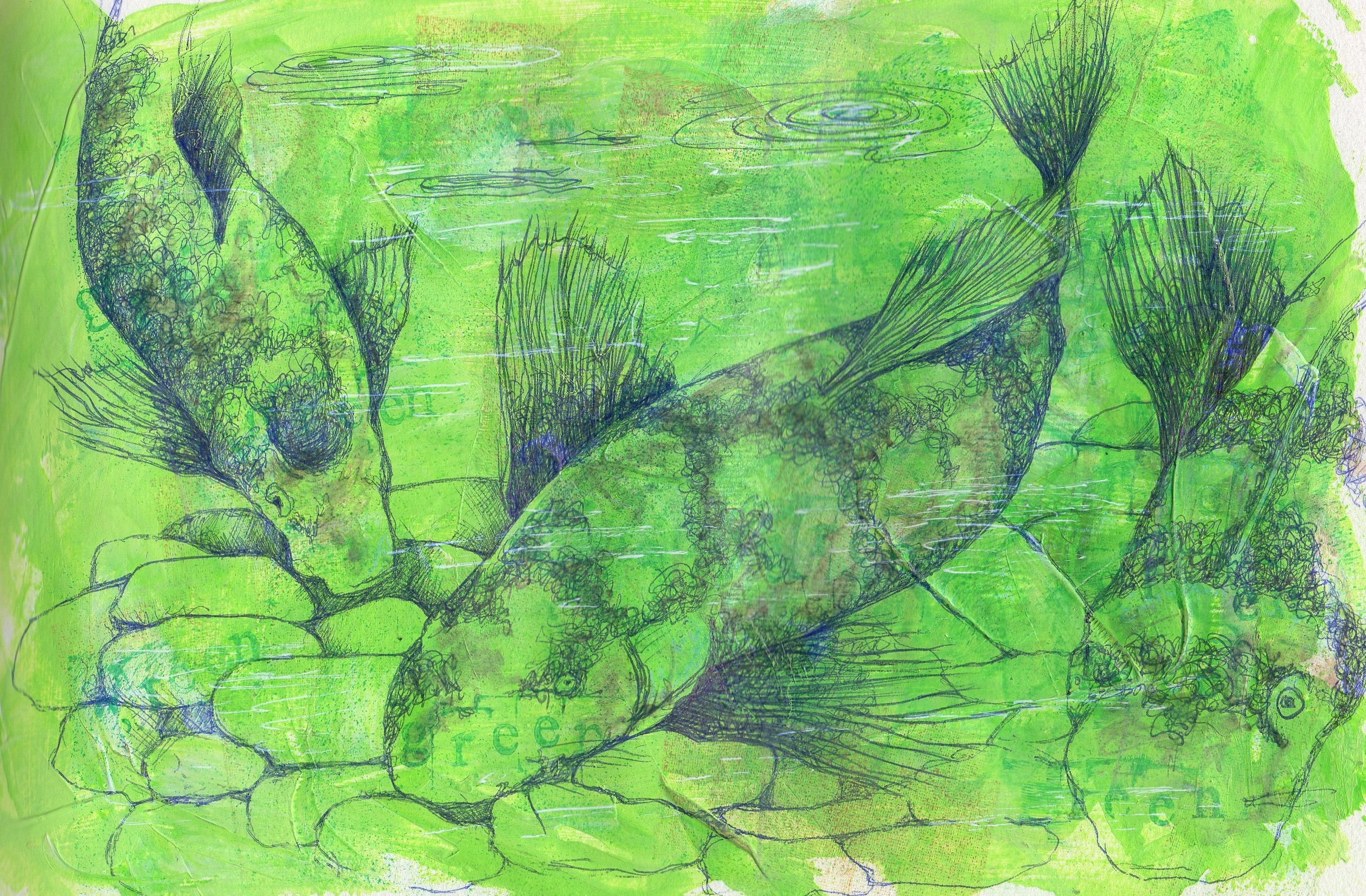

 That’s okay. As my birth certificate actually states my name to be ‘Sally’ rather than ‘Sarah’, this may, hopefully, be enough to keep me out of trouble should I ever decide to visit Morocco, but it also makes me wonder—if a name as simple as Sarah can be deemed illegal in a country because of the letter ‘h’, how are some of this generation’s children, many of whom have, shall we say, increasingly ‘interesting’ personal monikers, ever going to be able to go out and about travelling the world without causing some sort of major international incident?
 Most countries do have laws in place about what you may or may not call your children, and some are stricter than others. In Germany, you must be able to tell the gender of the child by the first name, and the name chosen must not be negatively affect the well being of the child. In Iceland the name must only contain letters in the Icelandic alphabet, and must fit grammatically with the language (so no Caroline or Christine as there is no letter ‘c’ in Icelandic.) Denmark has a list of 7,000 pre-approved baby names. If parents want a name that is not on that list they must get special permission from their local church and then it must be reviewed by government officials.
 New Zealand also requires parents to run prospective names by the government. Its naming rules are similar to those of Australia but recent applications received by their authorities seem just a tad more ‘out there’. Over the last few years New Zealand has repeatedly rejected applications for people to name their children Lucifer, Christ, Mafia No Fear, 4Real and Anal. (Seriously.) However, in spite of rejecting those names, in 2008 the same authorities made international headlines when they allowed a set of twins to be named ‘Benson’ and ‘Hedges’ and also agreed to the name ‘Number 16 Bus Shelter’ . . . (I really feel that I should comment on this, but honestly, speechless . . . )
 Although I am not a parent (to any two legged children at least) I do understand that some parents might want their child’s name to be special or unique, and I think that is a lovely idea. I am also not entirely averse to being a bit imaginative or creative with spelling choices (and you might have to be if you live in Morocco or Iceland), but, in all seriousness, one would hope that any parent might give at least a moment’s thought to the fact that said child will have to go through a significant portion of his life having to bear that name—at least until they are old enough to throw themselves upon the mercy of the courts to have it changed.
 Sally says . . . eat, sleep, work, read, play, draw, bark . . .